

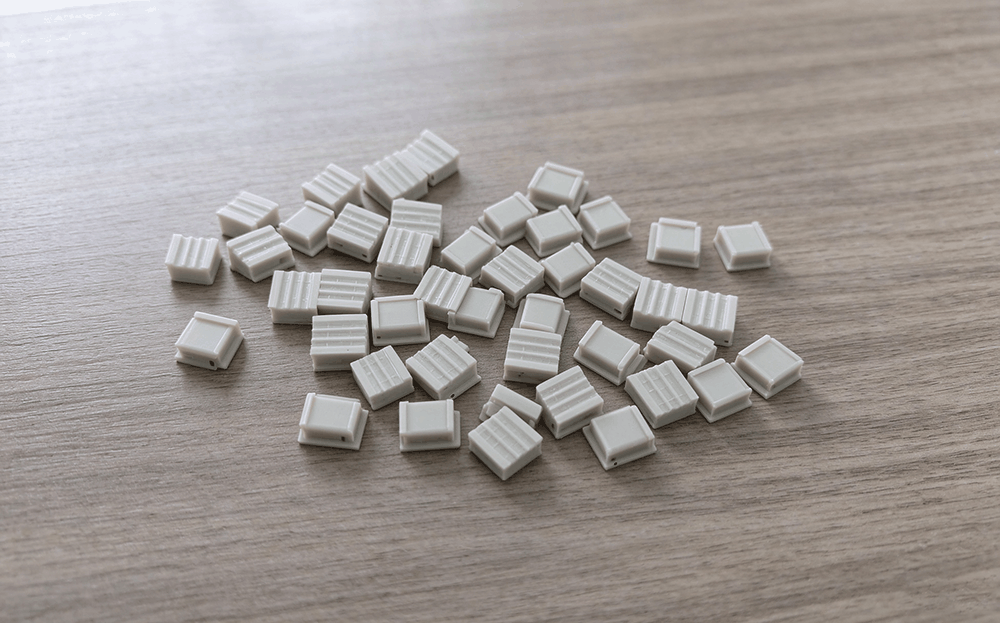
PEEK is a high-performance thermoplastic used for parts that need high temperature, chemical resistance and strong mechanical performance. It costs more because the material and processing requirements are demanding.
Material comparison data
| Material | Nozzle | Bed | Heat deflection | Service heat | Data status |
|---|---|---|---|---|---|
| PEEK | Not supplied | Not supplied | Not supplied | Not supplied | Data gap |
| PC | 250–280°C | 100–120°C | Not supplied | Up to 125°C | Partial |
Source: PIBUNO project material workbook and existing product templates. “Not supplied” means the project did not include a verified value; it is not an industry default.
What PEEK is
PEEK stands for polyether ether ketone. It belongs to the polyaryletherketone family and is used in demanding engineering applications.
High performance does not make it a universal replacement for PLA or PETG. The printer, part design and application need to justify the process.
Why PEEK filament costs more
The polymer itself is expensive. High-temperature extrusion, controlled cooling, drying and specialized equipment add production and qualification costs.
Low-volume colors and special grades also cost more than a standard high-volume material.
What PEEK can offer
Depending on the grade and test, PEEK may provide:
- High temperature tolerance
- Chemical resistance
- High mechanical performance
- Dimensional stability
- Low wear in some applications
Review the supplier data for the exact product and part condition.
Printer requirements
A PEEK-capable printer typically needs:
- A high-temperature hot end
- A high-temperature heated bed
- Chamber temperature control
- Compatible nozzle and feed path
- Moisture control
The engineering filament category shows related high-performance materials.
Annealing and part performance
Some PEEK parts require controlled thermal treatment. The process can change crystallinity, dimensions and performance.
Test the finished part after the full production process. A raw filament data sheet is not a finished-part specification.
Where it fits
PEEK may be considered for:
- High-temperature fixtures
- Wear components
- Chemical-exposed parts
- Aerospace or industrial prototypes
- Specialized production components
For less demanding work, see PC, the ABS and ASA range and engineering filament materials.
Plan the part around the process
PEEK parts often need a larger production plan than a simple print. Wall thickness, support strategy, drying, chamber temperature and cooling all affect the result.
Sharp transitions and thick solid masses may create thermal stress. Discuss the design with the printer operator before selecting a grade.
Qualify the finished part
Check dimensions after the complete thermal process. Test the real load, temperature and chemical exposure.
Keep the material certificate, spool identity, print profile and post-process record with the approved sample. A material change should trigger a new review.
When a lower-cost material is enough
If the part only needs moderate heat or impact, PC, ASA or a filled nylon may be easier to produce. PEEK makes sense when the application truly needs its combination of properties.
What makes PEEK different
PEEK belongs to a family of high-performance polymers used where ordinary plastics do not meet the temperature or chemical requirement.
That performance comes with an equipment burden. The material may need a very high nozzle, heated chamber and controlled cooling. Not every printer marketed as enclosed can process it.
Review the application
Define the service temperature, chemical exposure, load and duration. A high-temperature label does not show that the printed part will retain its dimensions or strength.
Check whether the part needs wear resistance, chemical resistance or a low-friction surface. The best polymer family depends on the actual failure mode.
Printer checklist
Confirm:
- Maximum hot-end temperature
- Heated bed and chamber
- Nozzle material
- Feed system
- Drying equipment
- Recommended cooling
Thermal processing
Some high-performance polymers require annealing or a controlled cooling path. Follow the exact grade data and printer procedure.
Thermal treatment can change dimensions. Measure the part after the complete process, not immediately after printing.
Cost and order planning
The material cost is only one part of a PEEK project. High-temperature machine time, drying, low-volume production and testing add cost.
For a small prototype, compare the value of the test with a lower-cost engineering alternative. PEEK is justified when the service condition genuinely requires it.
What to request
Request the grade, color, diameter, spool format, process range, drying conditions and available technical data. Ask for the printer requirements in writing.
Keep a sample and the complete process record before making a production commitment.
Define the reason for PEEK
Write down the failure that standard materials cannot meet: temperature, chemical exposure, wear or dimensional stability.
If the answer is “it sounds stronger,” the project may not justify the process. Compare PC, filled nylon or another engineering grade first.
Design with the process
Thick walls, sharp transitions and large solid areas can increase thermal stress. Discuss the design with the printer operator.
Test the finished part after any annealing or controlled cooling. Measure the features that must fit the assembly.
Qualify a supplier
Ask for grade, color, lot information, process range, drying requirements and available data. Confirm that the supplier can repeat the product.
Keep the approved spool and process record. The material name alone is not enough for a high-value production project.
Recognize the economic threshold
PEEK is appropriate when the cost of failure in heat or chemicals is greater than the cost of specialized processing.
For a visual prototype, a lower-cost polymer may provide the needed learning before the project reaches a high-temperature test.
Keep the process controlled
Drying, printing and thermal treatment should be documented as one process. A change in any step can alter dimensions or performance.
Test the finished part and retain the result. The buyer should know which conditions produced the approval.
Define the acceptance test
Measure dimensions after thermal processing. Apply the expected load and expose the part to the intended chemical or temperature condition.
Record failure mode, not only pass or fail.
Compare alternatives honestly
PC, PEI and filled engineering polymers may solve part of the requirement with less process burden.
The correct comparison uses the same functional test, not only material price.
Protect the process record
Store the material certificate, dryer record, printer log and post-processing result together.
Do not separate the approved part from the parameters that produced it.
Reassess after a change
A new material lot, nozzle, chamber condition or processing method can change the result.
Repeat the first-article test before shipping a high-value order.
Plan support and cleaning
High-temperature materials may require support structures that are difficult to remove. Test the support interface and cleaning method on the production geometry.
Avoid a design that leaves support in a critical seal or wear surface.
Keep the operating window
Document the range that produced the approved part, not only one successful setpoint. The process should remain controlled across normal variation.
Inspect the final surface
Check layer quality, support marks and any post-processing damage. A high-performance material still needs a sound printed surface.
Measure critical features after the complete thermal process.
Keep a traceable sample
Store the material, process and finished-part record. A replacement batch should not rely on memory.
Decide before scaling
Confirm the printer, thermal process, test result and supply lead time before committing to a batch.
If one of those controls is not available, the project remains a prototype rather than a production release.
Check support and dimensions
High-temperature materials can need substantial support. Remove it without damaging the surface and inspect the cleaned part.
Measure the finished geometry after the full thermal process. A printer profile that looks correct before cooling may not meet the final fit.
Match the purchase specification
The order should identify the grade, color, diameter, net weight and spool format. Process and post-process records should refer to the same identity.
A future certificate or material lot should be connected to the approved part. Without that traceability, the project cannot demonstrate repeatability.
Review the complete result
Inspect dimensions, surface and the loaded area after all thermal processing. A material certificate alone does not show that the printed part is fit for use.
Keep the tested sample and process record with the purchase file.
The same record should be reviewed if the printer, material lot or thermal process changes.
Confirm the application fit
Check the part with the intended fixture and load. A high-temperature material should not be approved only from a data sheet or a small coupon.
Keep the approved process
Record the material, printer, thermal treatment and finished-part result. A repeat order should begin from that evidence rather than from a generic material name.
Review the complete process whenever the material or thermal equipment changes.
The approved part should remain paired with the conditions that produced its dimensions and performance.
If a replacement material is proposed, review the complete thermal and mechanical process rather than checking only the headline temperature.
Keep the tested component and process record together for the next order.
Review the full result
Check fit, surface and load after the complete process. The material and printer settings belong in the same test record.
Keep the sample with the approved process so later production can be compared.
The approved record should identify the printer and thermal equipment used for the test.
FAQ
What is PEEK filament used for?
It is used for demanding engineering parts that need heat, chemical or mechanical performance beyond standard plastics.
Can a normal 3D printer print PEEK?
Usually not. PEEK needs a printer with high-temperature capability and controlled processing.
Why is PEEK so expensive?
The polymer, high-temperature equipment, low-volume production and qualification requirements add cost.
Is PEEK food safe?
Do not assume PEEK is food safe. The exact grade, printed part and intended contact condition require review.